A blog devoted to more than half a century of recreational fishing in and around Connecticut in both fresh and salt water. Fishing is more than having fun with fish. The people we met and shared the game with will never be forgotten.
Thursday, October 13, 2022
PIC-TALES -- #1 For The Birds!!!
Sunday, August 7, 2022
WESTPORT SMELT - GONE BUT NOT FORGOTTEN!
WESTPORT SMELT
GONE BUT NOT FORGOTTEN
by
Dick Alley
I moved to Westport in 1952, but didn't get into saltwater fishing until the late 1950s after my stint in the Army. The other day I was going through old photo's and a shot dated March of 1968 triggered a sad memory. It was the last time I remember a smelt run in the Saugatuck River.
In those early years, winters were cold and the earliest activity we could find on the river was netting Westport Smelt with scoop nets. It was something to do and the smelt were delicious. In fact, Westport smelt were known far and wide as some of the best.
Pat Fratino was Westport's Harbormaster. He was also a commercial fisherman and had a small but busy fish market on the lower level of the building bordering the river in Bridge Square just below Cribari Bridge. Pat would lobster in the summer, but he always started his season with fresh smelt from the Saugatuck River.
He caught the smelt in a huge net which he stretched across the river just north of Church of the Assumption and he pulled the net sometimes twice a day depending on the tide. What he didn't sell in his own market, he loaded into his pickup truck and drove down to sell them at the Fulton Fish Market in NYC. . Often local friends and fishermen would stop by to help haul the net and were rewarded with a few smelt for the dinner table.
1968 boasted an excellent spring run of smelt. Pat made good hauls every day. Many of the local gang had scoop nets and waded the upper tributaries leading into the river, scooping up limits of smelt to share with friends and neighbors. My favorite spot was the little brook behind what was then North Main Garage. Others found the fish in good numbers in Dead Mans Brook behind the police station and other small brackish streams.
On this particular day, I happened to stop by as the guys were making their first pull of the net. I remember Mike and Pat Cofelice were there. So was Joe Saviano.
The bulge in the net as they drew it towards shore made it obvious that the net was packed with fish. As the fish came out of the water, guys on shore transferred them into bushel baskets and loaded the fish-filled containers onto the back of Pat's truck.
Everyone helping took home as many fish as they wanted and Pat headed for the market. I later heard that he brought the price down to 10 cents a pound that day. The following day, the net came in empty and the day after that and for several days thereafter. To my knowledge, Westport never saw a smelt run again.
30
Thursday, August 12, 2021
SNAPPER BLUES - SEPTEMBER SPECIAL
BABY BLUEFISH- More commonly known as snappers or snapper blues show up in August and grow through the month of September at a phenomenal speed. They are fun to catch, delicious to eat and for years capped off summer vacations for hundreds of Westport anglers ranging in age from 8 to 80. That's the good news.
On the flip side, what was once a thriving sport fishery, has been over-regulated to the point that snapper fishermen are getting hard to find.
Back n the 60's and 70's, before cell phones, when a fun afternoon consisted of catching the dropping tide at a favorite snapper spot, the Post Road Bridge in the center of town was lined with anglers of all ages, fishing the first couple of hours of the drop and loading buckets with baby bluefish to be taken home, cleaned, some set aside for the evening dinner and on the good days, some frozen for dinners throughout the winter. Weekends in August and September showed the bridge lined from one end to the other.
Mary Eliason one of Westport's longest serving school crossing guards fished the creek at Burying Hill on a daily basis, feeding her pet cats at home and releasing the fish she caught after the cats were fed.
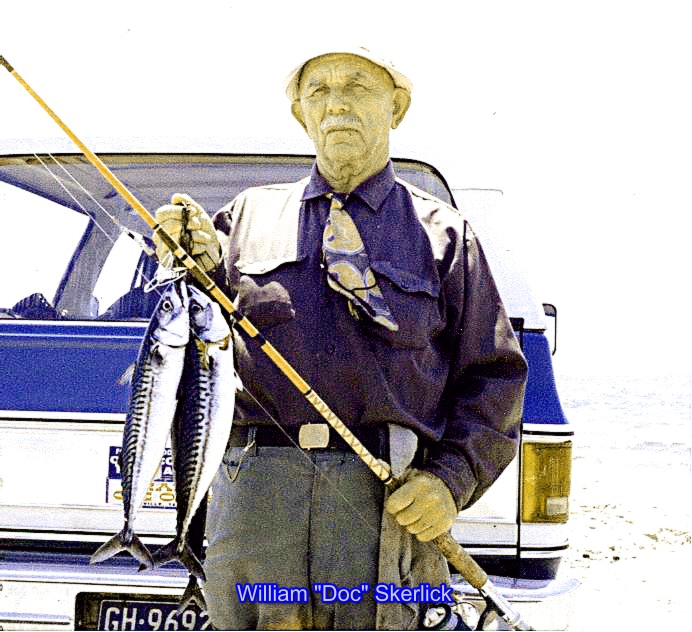
Legendary Westport fisherman and conservationist, William, "Doc" Skerlick, lived in the trailer park on the Post Road and didn't have a freezer, but every year he found someone willing to share some freezer space, caught a daily tally of snapper blues
An old photo from the creek at Burial Hill. Note the long bamboo poles - were a popular choice for catching snappers without investing in more expensive fishing outfits.
and later in the fall put on a snapper feast for one or another of the conservation organizations he belonged to.
SNAPPERS are easy to catch. A light spinning rod and reel, artificial lures and/or frozen shiners provide a sure path to a successful fishing day -and that is the flip side of the story. The current 3-fish per day limit on bluefish includes snapper blues.
I caught my first snapper yesterday. I found them at the creek at Burying Hill. First cast with the popular SNAPPA-POPPER produced a hit. Next cast, a bluefish about 3 or 4 inches in length (released of course) and a couple more hits followed. As the heat index was in the triple figures, I packed the rod back in the car and enjoyed the air-conditioning on the ride home, convinced that there should be some good snapper fishing over the next few weeks.
By the time these little guys pull out ahead of a cold snap or a Nor'easter, many fish will average 8 to 12 inches in length. Right now, even a 3-fish limit couldn't provide a meal.
I am sure these biologists are well educated and highly qualified and are convinced that the baby blues need to be preserved. However, sometimes common sense has to enter into the picture. Snappers have always been a favorite bait for fluke fishermen. Indeed, the fluke population consumes thousands of these baby bluefish a day, far more than recreational anglers. Many additional species are predators that consume snappers. Three fish a day is a reasonable limit for adult bluefish. Not for snappers!
Recreational anglers who enjoy snapper fishing also like to eat their catch. In these inflationary times, senior citizens, jobless and low-wage workers look for ways to put food on the table. For people who fish for more than fun, snappers head the list.
Snappers also have very sharp teeth. They must be handled carefully as simply brushing a finger along those teeth will draw blood. Handling them safely also can injure the fish so that many of those that are released don't live anyhow. Better they be consumed by those folks who appreciate them.
They are found close to shore. Tidal creeks, coves and shallows are the hot spots. In Westport, the Old Mill, Sherwood Mill Pond, New Creek and dozens of spots along the Saugatuck River are snapper locations.

Take your choice. Depending on the tide, either side of the bridges at the Old Mill can be productive.
Looking downstream at Pasacreta Park, numerous areas are potential snapper spots. The Post Road Bridge is best at change of tide and the first hour or so on the drop.
Unrealistic limits and our high-tech world have robbed a generation of one of nature's greatest gifts. Fishing is one of the safest and best activities for youngsters adults and families in these crazy Covid times.
30
Thursday, March 4, 2021
2021 TROUT SEASON IS OPEN!
2021 FISHING SEASON OPENS EARLY
by Dick Alley
2021 FISHING SEASON NOW OPEN!
Today, Governor Lamont signed an executive order opening the 2021 fishing season officially open.
Trout season is open in all lakes and ponds, rivers and streams throughout the State. Likewise for other fresh water species.
GOVERNOR LAMONT SIGNS ORDER OPENING CONNECTICUT’S FISHING SEASON EARLY
Trout Fishing Season Opening Early to Encourage Social Distancing, Anglers Reminded to Exercise Caution if Fishing on Late-Season Ice
(HARTFORD, CT) – Governor Ned Lamont today announced that he has signed an executive order removing closed seasons for fishing on all inland waters in Connecticut, and opening additional lakes, ponds, as well as rivers and streams to fishing statewide, effective today. The governor signed a similar order last year to open the state’s fishing season early at the onset of the COVID 19 pandemic.
Executive Order No. 10B removes prohibitions on fishing for trout, effectively advancing opening day of trout season from April 10, 2021 to today. The governor said that opening the fishing season early permits anglers to enjoy additional access to outdoor recreation, which has been a help to residents’ mental and physical health.
“Opening the fishing season early helps to reduce opening day crowds and limit the potential for spread of COVID-19,” Governor Lamont said. “Anglers are encouraged to continue to practice social distancing, and we encourage fishing to be enjoyed only with members of your immediate household and not as a group activity.”
Connecticut saw a 17 percent increase in new fishing and hunting license sales last year, evidence of how residents are enjoying the state’s spectacular fisheries and natural resources as a safe respite during the pandemic.
The Fisheries Division of the Connecticut Department of Energy and Environmental Protection (DEEP) began its 2021 spring stocking of all traditional trout fishing areas in early February. There are also plenty of opportunities to fish for bass, pike, walleye, catfish, and carp in areas that are usually closed at this time of year. Anglers are reminded to purchase 2021 fishing licenses, Trout
& Salmon Stamp, and Youth Fishing Passports online, through DEEP’s mobile friendly website or access through DEEP’s main fishing website.
Important Reminders
Rivers & Streams: DEEP will be stocking throughout March and early April and anglers are encouraged to enjoy early season fishing on rivers and streams that are traditionally closed during this time.
Ice Fishing: Ice fishing opportunities may exist on some waters in parts of Connecticut. DEEP does not monitor ice thickness and warns all anglers to exercise caution if planning to fish on the ice. DEEP reminds winter anglers that safety comes first. Be aware that ice thickness varies on all waterbodies due to a number of environmental factors, including in-lake water circulatory patterns. Please check the late season ice carefully before venturing out and check repeatedly to make sure that ice thicknesses are sufficient. Remember, late season ice is not as safe as early season ice. Thickness that would be safe at the beginning of the season should be viewed with caution now. If in doubt, DO NOT GO. Always let someone know where you are going and when you will return. Visit the DEEP Ice Safety webpage for more information.
Social Distancing: Anglers should maintain a distance of at least six feet from others, practice good personal hygiene, and stay home and away from others if you feel sick. If you arrive at a favorite fishing spot and see that crowds are forming, choose a different location, or return another day or time. Please respect social distancing for your safety and that of our staff if you encounter DEEP’s hard-working staff stocking trout.
Boat Launches: All of DEEP’s 117 boat launches located throughout the state remain open provided the launch is free from snow/ice, although docks will not be in place yet. DEEP reminds boaters that social distancing rules still apply and all boaters are encouraged to consider the size of the vessel, the number of people on board, and the ability of people to keep separation distances. From October 1st through May 31st, you must wear a Life Jacket (state law). All children 12 and under must wear a Life Jacket. Whether fishing from a kayak, canoe, rowboat, or outboard a PFD can save your life should you capsize.
While Executive Order No. 10B opens water to fishing, all other fishing laws and regulations, including requirements for a fishing license and trout and salmon stamp when needed, and all methods, creel limits and length limits remain in effect. The executive order does not change the regulations for Trout Management Areas that are currently open for catch and release fishing only nor does it change the one fish per day, 16 inch minimum length, currently in effect at Trout Management Lakes.
DEEP has many great sources of information available to anglers through social media, email, and the agency’s improved website. The 2021 Connecticut Fishing Guide has loads of valuable information for anglers, as do the DEEP Fisheries and Wildlife pages on Facebook (facebook.com/CTFishandWildlife) and Twitter (twitter.com/CTFishWildlife). Questions about
fish or fishing can be emailed directly to mike.beauchene@ct.gov, who can provide assistance in as timely a manner as possible during normal working hours.
**Download: Governor Lamont’s Executive Order No. 10B
###
Monday, February 22, 2021
TMA TIME!
TMA TIME
by Dick Alley
February 22, 2021
TIME FOR TMA FISHING
Today is George Washington's birthday. Late February. Looking out the window, it's raining, or maybe a mix. It was snowing hard an hour ago, hard enough to coat the parking area. I'm still smiling. The thermometer is supposed to rise into the high 40's on Wednesday, maybe 50 this weekend. That is enough to make me smile. I had my first Covid shot almost two weeks back. One to go in early March. Another reason to smile. It is all good, but even better, the early trout season will begin in just a few days.
Regular trout season doesn't begin state-wide until the second Saturday in April, but if the normal schedule is followed, maybe this week, maybe next, Trout Management Areas in Connecticut will receive their first trout plants of the year and catch and release fishing will open up in these areas. Add in a few specially designated lakes that offer an extended trophy trout season through March 31st and forget all about those winter doldrums.
Westport's local TMA is the Doc Skerlick Trout Management Area located in a stretch of the Saugatuck River between the Dam at the old Dorr Mill, on down to the Merritt Parkway where the river feeds into Lee's Pond. That stretch of river is restricted to FLY FISHING ONLY, but is open to fishing throughout the year with the added restriction of catch and release fishing between the end of September and the second Saturday in April.
Another popular TMA is the Cascades on Mill River in Fairfield, where catch and release fishing restrictions are similar in the pre-season, but where fishing with spinning gear or bait is also allowed.
Another nearby spot is the Mianus River in northern Greenwich which has a TMA section. This stretch is especially noted for its stonefly population, making those imitations the big attraction for fly fishermen. Additional locations are listed in the Angler's Guide, the DEEP publication which will be coming out with the latest edition in March but is also available on the CT DEEP website.
Also listed in the Guide are the Trophy Trout Lakes which offer an extended season through the end of March. Depending on the weather, fishing can be in open water or through the ice, but a two trout over 15-inch limit is the rule. Some of these lakes also have been stocked with Atlantic salmon, often surprising lucky anglers with a real trophy.
Most of the freshly stocked trout in the TMA's will hit streamers and nymphs in the early season. Patterns like the Mickey Finn, the Hornberg Special, Woolybuggers and the Hare's Ear nymph have always produced well for me.
Where spinners are allowed, try Trout Magnets, Rooster Tails, Blue Fox spinners, but be sure to consult the guide in advance as some spots require single hook only lures.
Early spring, late winter trout fishing is the best cure for cabin fever. It wasn't always like this. Way back when I was young, trout season ended the last day of October and opened the third Saturday in April. I think it was back in the 60's that the DEEP tried opening the first TMA on the Willimantic River. The Cole Wilde TMA quickly grew in popularity, offerring CT anglers a chance for early season fishing for the first time. Today, similar areas exist across the State, including the one dedicated to my old friend, the late Doc Skerlick.
A CT fishing license is required for anglers over 16 years of age, as is a trout stamp. ENJOY! Trout season is back .
30
Wednesday, December 2, 2020
FIRST TROPHY TROUT - GOLLY, I'M GETTING OLD!
Todd with a nice rainbow in 2018. He caught it at the lower end of the campground.
Sunday, November 8, 2020
BONUS WEATHER FOR LATE-SEASON ANGLERS:
by Dick Alley
WOW! As I sit and type, the weather guys are predicting another 10 days or more with daytime highs in the 50's, no frosty mornings and bonus fall fishing.--- and we're not just talking salt water. Fall trout and salmon stockings are happening. There is no better time to squeeze in a trip to the shores and tributaries of Lake Ontario.
Salt water species are migrating and stopping off to feed at warm-water spots like power plant outflows. This beauty was caught some years back when Millstone was open.
Blackfish are always popular for late season anglers. When we can fish for them in 60-degree temperatures they become a late fall favorite.
There is still time for targeting lunker-size striped bass and gator blues. As the migration continues and action fades along the Connecticut and Westchester shorelines, the hop across to Eaton's Neck, Buoy 11B then westward to Oyster Bay can bring bonanza catch and release fishing for schoolie-size fish.
Wednesday, October 7, 2020
ANGLINGwithALLEY: SALT WATER LONG ISLAND SOUND FALL FISHING
SALT WATER LONG ISLAND SOUND FALL FISHING
Digestive problems put me in Norwalk Hospital for a few days and off the grid as far as my writing schedule goes. I came across this article I wrote for OUTDOOR TIMES back in October of 1998, which pretty much covers the current fishing picture more than 2 decades later. The numbers may differ, but fishing is still pretty good. Just wish I could be out there taking part. I've added a few photo's for flavor. - Dick Alley
THE SOUND OF FALL - LONG ISLAND SOUND!
. SALT WATER BONANZA - Indeed, one of the biggest dilemma’s facing sportsmen and women in the fall months of the year, is in deciding which direction to go. There’s an archery season for deer, upland bird and small game hunting season, a fresh plant of trout in the state’s major trout streams and the fall migration in Long Island Sound. Long Island Sound comes alive with striped bass, bluefish, blackfish and winter flounder action, as fall migration patterns kick into gear.
STRIPED BASS migrate through Long Island Sound to the Hudson River and southern waters where they’ll settle in for winter at spots like Storm King Mountain area of the Hudson River and Chesapeake Bay. Enroute, they’ll delight anglers at spots like Montauk, the Race off New London, both shores of Long Island Sound, before stopping off at Asbury Park, Long Branch, Atlantic City and more spots along the Jersey shore. Long Island Sound offers sheltered water fishing and fantastic fly-rodding without the heavy surf of the open ocean. Tremendous schools of stripers often come through in waves, targeting migrating baitfish like bunker, spearing and sand eels, and wherever the food fish are found, a fisherman can find memories that will last through the winter months.
Spin fishermen, bait fishermen and fly-rodders all catch their share of these schoolie bass. Most are under the 28-inch minimum legal length, but still provide plenty of sport on light tackle and fly rods. Inevitably, one day or two or five, may bring the bigger fish, cows with stripes, that roll in the surf, close enough to shore to touch with your rod tip, especially if they’re passing in a Nor’Easter when the waves crash, and bait is trapped among the reefs, sand bars and grasses bordering the shoreline of the western Sound. Anglers lucky and wise enough to explore the beaches at this time of year, usually get their shot at big fish, including the shore-bound anglers who fish the estuaries, casting to pods and pockets of linesiders passing through.
In Connecticut waters, anglers are entitled to two-fish, 28-inches or better a day. Look for the stripers to be around until the end of November.
BLUEFISH - They migrate a few weeks ahead of the stripers, and can be found schooling up in September well ahead of the striped bass migration. They’ll bounce from beach to reef, feeding throughout the day and night as they prepare for the long trip south. Blues have been on a down cycle in comparison to what they were a decade ago.
That was a time when a fisherman with the time to do it, could head out any day and every day to fight these stubborn critters until his arms turned to rubber and fingers cramped so bad they had to be pried from the rod and reel. In the good years, fish weighing 15 to 20 pounds were fairly common, and 4 to 8-pound specimens were there whenever a lure was cast or a bait dropped to the bottom.
Will that happen in 1998’. I gave up predicting what fish would do a long time ago, but it’s certain that at least some of us will experience that superb fishing. If the bunker arrive in big numbers, the monster blues will be there too. It might be the waters off Greenwich, Norwalk, Bridgeport, the mouth of the Housatonic, or further east around the Connecticut or Thames Rivers. Best bet for big blues has to be the Race off New London, an area that has a history of good bluefishing, when they were absent in other Connecticut waters.
Smart anglers will keep an eye on reports coming out of Rhode Island. When the beaches are bouncing at Watch Hill and Westerly, it’s only a matter of days until the action will move to the mouth of the Connecticut River and on down to the Housatonic and points west as they move on through.
Major stop-off spots include Penfield Reef in Fairfield, Stratford Shoals (Middleground), the mid-Sound reefs between Bridgeport and Port Jefferson, numerous points in the Norwalk Islands, popular Stamford and Greenwich spots such as Todd’s Point, Captains Islands and Buoy 32A. It’s only a quick run to Buoy 11B off Eaton’s Neck on the Long Island side, another popular fall bluefish spot well into November.
Some days they’ll be on the surface, and others down deep, reachable with wire line and big trolling lures. If bunker prevail, chunk baits are a sure bet until the waters cool enough to move them south.
Blues have no size restrictions, but anglers are limited to 10 fish per day.
BLACKFISH - Best of the blackfish action comes in November, but October anglers do quite well. We’ll offer some info on the best spots then, but blackfish have been overfished and we now have size limits, creel limits and a closed season. Still, there is some good fall blackfishing to be had, and a taug or two can bring some of the best table fare to grace any feast.
Find some good bottom structure and it’s likely blackfish will be there. Middleground shines as a top spot for blacks, but just about any reef, sunken boat or bump on the bottom is likely to host a black or two.
Green crabs, hermit crabs, sandworms are all good baits. The current daily creel limit for blackfish is 4 fish per day, and the minimum size is 14-inches.
WINTER FLOUNDER - Earlier measures were exercised to combat overfishing of these spring and fall favorites, and they’re already showing some dividends. Spring flounder fishing has been better for the past couple of years. With flounder migrating from their summer grounds a couple of miles off shore into the bays and rivers, look for some nice flatties weighing a pound or more in the areas of Norwalk harbor, the Housatonic River and Charles Island area, Branford, Clinton, Westbrook and Old Saybrook waters, and the always prolific flounder grounds in the Mystic/Stonington area. Limits for winter flounder are 8 fish per day with a minimum legal length of 12-inches. Chumming is the key to successful flounder fishing. Frozen chum should be a part of your day’s bait supply.
SCUP - Porgies are at their best in the fall of the year. It was another good spring season, and anglers did very well around Fisher’s Island to the east, outside the Connecticut River, Hatchett Reef, Bartlett Reef, Southwest Reef , Falkner Island, the New Haven breakwaters, Buoy 20 in Stratford, Penfield Reef, Sherwood Island in Westport and Long Neck Point in Darien. The eastern Sound produces much better than the west end, where best porgy fishing requires a trip across to Long Island waters. There is no creel limit on porgies, but they must measure 8-inches or more to be legal.
The fall fishing prospects are good. Bad storms, excessive wind and rain can greatly affect those prospects, but the fall migration will take place irregardless. Smart anglers will be ready.
30
Sunday, September 20, 2020
Until The Snow Flies
In Long Island Sound, Striped bass and bluefish action dominates through mid-November for blues and the end of November for stripers. Toss in plenty of porgies, blackfish and black sea bass and there is barely time for bowhunting for deer, upland hunting season for small game, and fall trout and salmon stocking. All of those make for a busy couple of months before snow covers the ground and we begin to think ice fishing.


Thursday, August 13, 2020
THREE SNAPPERS A DAY --RIDICULOUS!!!
THREE SNAPPERS A DAY - RIDICULOUS!
by
Dick Alley
While my last blog about NO FISHING signs at Burying Hill Beach made mention of it as a prime location for fishing for snapper blues, it barely touched on an even sadder side of the fishing picture regarding these late summer and early fall favorites.
SNAPPERS are baby bluefish, spawned in the spring season and now in the 3 to 4-inch size. Before they leave in late September, many will measure half a foot in length.
I discovered snappers in the late 50's, early 60's, when I first began fishing the waters of Long Island Sound. I started with stripers, thanks to the late Ed Boland, first owner of the Westport Tackle Shop. The summer time striper picture slows considerably, but snappers are fun, fantastic in the frying pan and available in every cove, creek and current flow.
They are relatively easy to catch, feed on live or frozen fish baits and attack artificial lures with hard-hitting strikes that put a bend in a fishing rod and a smile on faces of kids from six to sixty and beyond.
![]() |
| At PAL snapper derby's the bamboo rods were ideal for starting kids snapper fishing. |
In the good old days, the easiest method was the bamboo pole, line and bobber, baited with a frozen shiner. Weekends in August and September found dozens of anglers lining the Post Road Bridge on the dropping tide and everyone catching fish. They were mostly families--Moms, Dads and youngsters all sharing in the fun.
More sophisticated and/or more experienced anglers utilized a favorite trout rod loaded with 4 to six pound test line, a heavier leader and a choice of a variety of shiny silver lures. Early favorites were the Thomas Eel, the Kastmaster, the small Hopkins, anything that was shiny and flashy. Then came the Snappa-Popper and variations that combined the splash of a panicked baitfish with plastic or rubber-based small lures. Many of us simply hooked up a bobber and baited with frozen shiners.
There were dozens of great spots along the river. Almost any dock was fair game for finding snappers. Fire-fighters fished behind the Firehouse in Saugatuck. Anglers lined the river bank next to the Black Duck. The waters under the I-95 bridge and boat ramp was a popular spot. The most popular locations for locals were always Burying Hill and the tidal gates at Sherwood Mill Pond.
![]() |
| A family fishes for snappers at Sherwood Mill Pond. |
A day's fishing consisted of filling a bucket to take home, clean and either feast or freeze for feasting during the winter months. Anglers could keep their catch. There was no limit and for decades, there was never a problem. Snappers came back in droves, year after year, no matter how good or bad the season was for the bigger of the species.
Now the biologists are telling us there is a shortage of bluefish and this year limited the daily catch to 3 blues, irregardless of size. Not in terms of "science" but in terms of common sense, this is ridiculous.
![]() |
| An older photo of the creek and bridges at Old Mill. |
Snappers are food fish for many ocean predators. They are a favorite fluke bait. Stripers, sharks, sea bass and probably even bigger bluefish all feed on snappers, along with seagulls, cormorants and likely lots of other critters found in the waters of Long Island Sound.
If the bluefish population wasn't harmed back in the days when few recreational fishermen paid attention to conservation, how can it be a problem now when there are far fewer anglers on the waters and most are aware of and practice conservation.
I doubt whether any of our so-called scientists could come up with any real numbers showing increased bluefish populations due to a 3-fish limit on snappers. I'm sure that there are real numbers of small tackle businesses that have shut down because of over-regulation of the recreational fishing community.
How many thousands of bait boxes full of frozen shiners won't be sold this summer? How many lures, rods and reels, bamboo poles won't be put in the hands of kids with nothing to do? Kids who could be safely enjoying the sport of fishing in a time when most other sports are deemed unsafe in these times of COVID-19.
How do we get a kid excited by letting him or her catch 3 fish in five minutes and then telling them it's time to go home? How do we produce a meal for a family with 3 fish measuring under 6-inches in length? A 3-fish limit is worse than ridiculous. It is obviously the product of a bunch of politicians, probably none of whom ever caught a fish in their life.
As were the NO FISHING signs at Burying Hill. As were the temporary signs blocking Westport citizens from Old Mill Beach earlier in the season. There's more, but for now it is snapper season and there is a 3-fish limit that is in fact--- RIDICULOUS!
-
SPRINGTIME STRIPER SPOTS by Dick Alley - April 2020 SPRING TIME STRIPER SPOTS! Striped bass fis...
-
Digestive problems put me in Norwalk Hospital for a few days and off the grid as far as my writing schedule goes. I came across ...
-
FISHING FROM SHORE - ALMOST A MEMORY by Dick Alley Twenty years is a long time. On my return to my home town after two decades, I expec...